
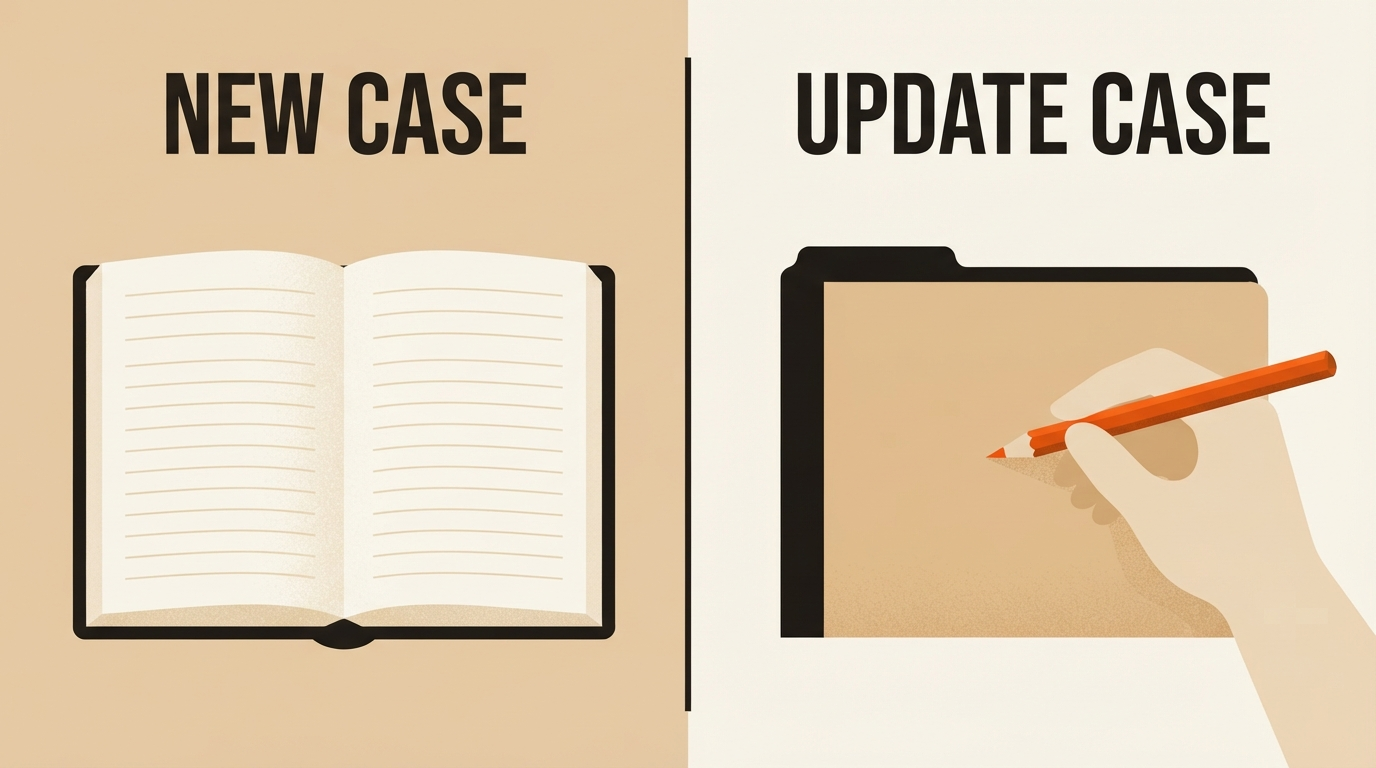
OSHA 300 Log: New Case or Recurrence?
Picture a warehouse worker who strained their back last year. The pain returns during a routine lift. Do you start a fresh line on the OSHA 300 Log, or adjust the original entry? The choice affects your recordkeeping accuracy.
Under 29 CFR 1904.6, you create a new OSHA 300 Log entry only when the later event is a "new case." If the employee already had a recorded injury or illness of the same type affecting the same body part and has not recovered completely, you update the prior case instead of opening a new line.
The OSHA 300 Log New Case vs Recurrence Dilemma
Small-business owners and safety coordinators face this question often. An employee with a past recorded injury reports symptoms in the same area. OSHA recordkeeping demands precision to distinguish a new case from a recurrence. Getting it right keeps your logs compliant and defensible during inspections.
The core rule sits in 29 CFR 1904.6. It provides a clear two-part test to determine if an incident qualifies as a new case. This framework guides whether to add a separate line or revise an existing one. Learn it well, and you'll handle OSHA 300 log new case vs recurrence decisions with confidence.
The Two-Part Test for New Cases
OSHA outlines the criteria in 29 CFR 1904.6(a). A case counts as new if it meets either condition:
- The employee has not previously experienced a recorded injury or illness of the same type that affects the same part of the body; OR
- The employee did have such a recorded case, but had recovered completely—all signs and symptoms disappeared. Then, an event or exposure in the work environment caused the signs or symptoms to reappear.
This test separates fresh incidents from continuations. The first part covers truly novel injuries. The second addresses returns after full healing triggered by work.
Key Elements of the Test
- Same type, same body part: Compare the injury or illness directly. A right wrist sprain matches another right wrist sprain, but not a left ankle twist.
- Complete recovery: All symptoms must vanish before the new onset.
- Work-related trigger: The reappearance stems from a workplace event or exposure.
What Counts as Complete Recovery?
Complete recovery means the employee has fully healed or been cured, per OSHA FAQ 6-1. Employers apply their best judgment, considering factors like time since symptoms last appeared and the physical state of the affected area.
A brief pause in symptoms does not signal healing. If signs disappear for one day and return the next, OSHA views this as strong evidence the injury persists. True recovery requires sustained absence of symptoms, often over weeks or months, depending on the injury's nature.
Judgment stays fact-specific. Track patterns: intermittent pain without resolution points to an ongoing case.
The Physician Rule in Action
29 CFR 1904.6(b)(3)
Consulting a physician or licensed health care professional is optional. If you seek input, follow their recommendation on whether the employee recovered completely.
Conflicting opinions? Select the most authoritative one—the best documented and reasoned. Record based on that choice. This provision respects professional insight while leaving final calls to the employer.
Chronic Conditions and New Exposures
Chronic Illnesses Without New Triggers: 29 CFR 1904.6(b)(1)
Some occupational illnesses recur or persist without fresh workplace contact. OSHA lists examples: occupational cancer, asbestosis, byssinosis, silicosis. Record these once. Do not create new entries each time symptoms flare.
New Episodes from Workplace Exposure: 29 CFR 1904.6(b)(2)
Contrast this with conditions like occupational asthma. If symptoms return due to a workplace event or exposure, treat the episode as a new case. The key? A distinct work-related cause reignites the issue after recovery.
New Case vs Recurrence: Side-by-Side Examples
Hypothetical scenarios illustrate the differences. These clarify OSHA 300 log new case vs recurrence without representing real data or legal rulings.
New Case Example
A warehouse associate recorded a right-shoulder strain two years ago. They returned to full duty with no signs or symptoms for many months. A new heavy lift at work causes pain in the same shoulder. The case meets recording criteria. Action: Open a new line on the OSHA 300 Log.
Update Prior Case Example
A warehouse associate recorded a low-back strain last year and still experiences intermittent symptoms. Pain increases this year with no new workplace event or exposure. Action: Update days away or restricted work on the original case. Do not open a new line.
Temporary Disappearance
Symptoms of a prior recorded injury vanish for one day and return the next. Action: Strong evidence of no complete recovery. Update the prior case.
Chronic Illness Without New Exposure
Recurring signs of occupational cancer with no new workplace exposure. Action: Retain the original case entry.
Practical Steps for Your Decision
Follow these steps each time symptoms reappear:
- Locate the prior case: Confirm same type of injury or illness, same body part on a previous OSHA 300 Log entry.
- Assess recovery: Did all signs and symptoms disappear completely?
- Identify trigger: Did a new work event or exposure cause reappearance?
- New case path: If yes to recovery and new trigger, evaluate work-relatedness and recordability. See step-by-step filling instructions.
- Recurrence path: Otherwise, update the original entry. Learn how to correct entries.
Handling Updates on Prior-Year Logs
If the original case appears on a prior-year log within the five-year retention period, update that entry directly. Avoid duplicating on the current year's log. Corrections maintain a single, accurate record across years.
Use your recordkeeping system to amend the exact line. This preserves the timeline and prevents confusion.
Accuracy Caveats for OSHA Recordkeeping
This overview draws from 29 CFR 1904.6 and OSHA FAQ 6-1. It offers practical guidance, not legal advice, medical advice, or determinations for specific employees. Complete recovery remains fact-specific. Always verify the current regulation text at osha.gov.
Precise records protect your business. When in doubt, document your reasoning based on available evidence.
Recordkeeping turns moments of uncertainty into a clear audit trail.
FORM 300 LOGBOOK provides a recordkeeping workspace with guided entry. Keep cases organized and audit-ready. Open the recordkeeping workspace.