
OSHA Severe Injury Reporting: 8-Hour and 24-Hour Deadlines Explained
Picture this. Friday afternoon at your small auto repair shop. A mechanic slips under a lifted truck while draining oil. His leg gashes open on the jack stand. Blood pools on the concrete floor. He clutches his thigh, yelling in pain. You call 911. Paramedics rush him to the hospital. By evening, surgeons admit him overnight for stitches and monitoring.
Panic sets in. Does OSHA need a call? When exactly? And is this incident recordable on your OSHA 300 Log? Hold on. Reporting a severe injury to OSHA under 29 CFR 1904.39 is not the same as recording it on the Form 300. These are two distinct duties. All employers must report qualifying events. Even if you qualify for partial exemptions from routine OSHA recordkeeping.
FORM 300 LOGBOOK is independent software for organizing OSHA 300, 300A, and 301 recordkeeping information. It is not affiliated with, endorsed by, approved by, or operated by OSHA or the U.S. Department of Labor. This article is independent educational guidance based on sources published by OSHA. It is not legal advice, does not replace official OSHA forms, does not submit records to OSHA, and does not guarantee compliance.
Two Clocks, Two Duties
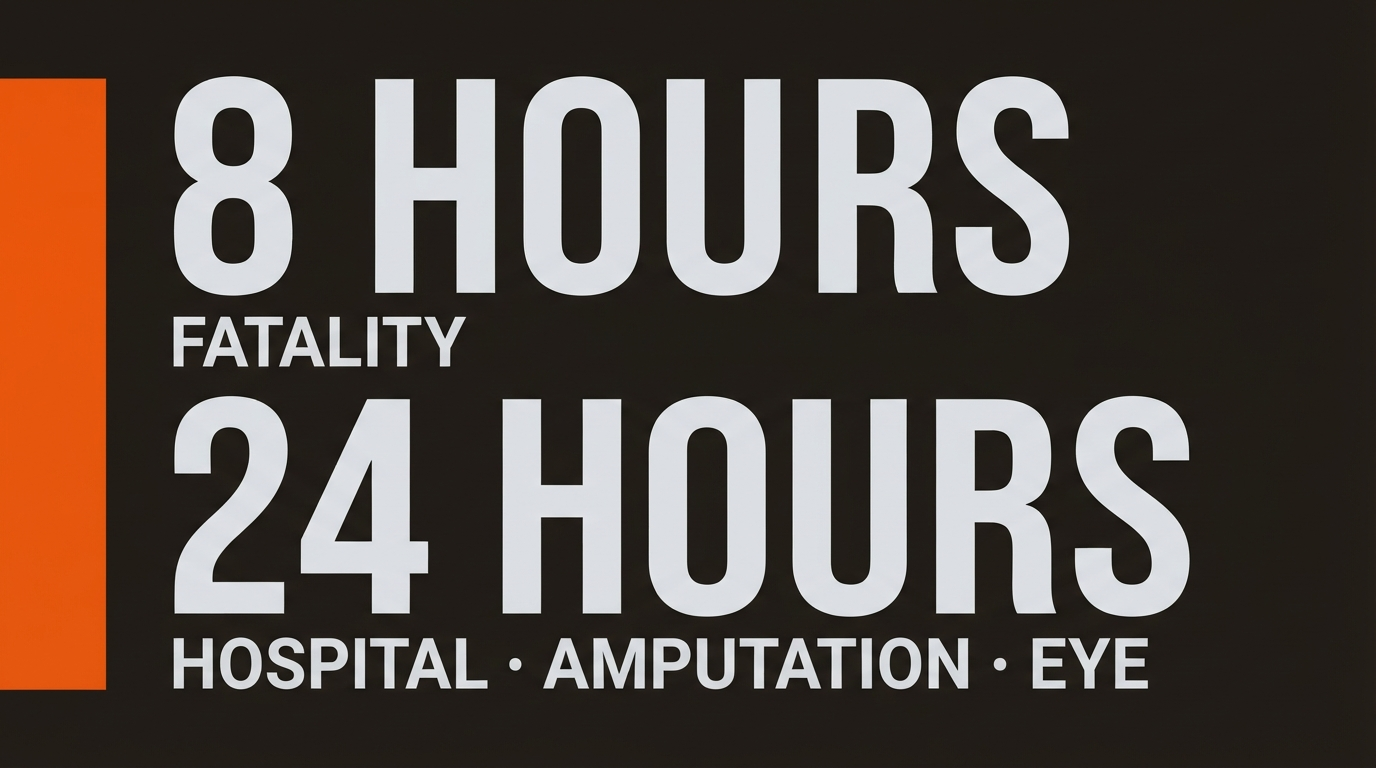
OSHA severe injury reporting triggers strict deadlines. A fatality demands action within 8 hours. In-patient hospitalization, amputation, or loss of an eye requires reporting within 24 hours. These rules apply under 29 CFR 1904.39. Miss them, and face penalties.
Recording on the OSHA 300 Log follows separate criteria. A case might be reportable but not recordable. Or recordable without reporting. Or both. Learn more in our guide on OSHA recordable vs. reportable injuries.
The 8-Hour Fatality Report Rule
Report a work-related fatality to OSHA within 8 hours of the death. Per 29 CFR 1904.39(a)(1). The clock starts at death. But only if it occurs within 30 days of the incident. See FAQ 39-6.
Did not learn immediately? The 8-hour clock begins when you or your agent learns of the fatality. Or when you learn it was work-related. Whichever is later. 29 CFR 1904.39(b)(7) and (b)(8).
Heart attacks count if work-related. OSHA's Area Office Director decides on investigation. 1904.39(b)(5).
The 24-Hour Rule: In-Patient Hospitalization, Amputation, or Loss of an Eye
Report these events within 24 hours of the incident. 29 CFR 1904.39(a)(2). Covers one or more employees. Same delayed-knowledge rules apply as fatalities.
In-Patient Hospitalization vs. ER Visit
In-patient hospitalization means formal admission to a hospital or clinic's in-patient service for care or treatment. 1904.39(b)(9). Not an ER visit. Not observation. Not diagnostic testing only. Not an overnight stay without formal admission. FAQ 39-10 confirms: no reporting for observation or diagnostics alone.
Check our post on OSHA first aid vs. medical treatment for recording distinctions.
What Counts as an Amputation?
Traumatic loss of a limb or external body part. 1904.39(b)(11). Includes severed parts. Partial or complete fingertip amputations, with or without bone. Medical amputations from irreparable damage. Even reattached parts.
Excludes avulsions. Enucleations. Deglovings. Scalpings. Severed ears. Broken teeth.
24-Hour Time Window
Event must occur within 24 hours of the incident. Unlike fatalities' 30 days. Late events may still need 300 Log entry if recordable.
Information to Have Ready
Prepare these details before reporting. 1904.39(b)(2):
- Establishment name.
- Location of the incident.
- Time of the incident.
- Type of event (fatality, in-patient hospitalization, amputation, loss of an eye).
- Number of affected employees.
- Names of employees.
- Your contact name and phone.
- Brief incident description.
Federal OSHA Reporting Channels
Use these. 1904.39(a)(3) and osha.gov/report:
- Phone or in-person to the nearest OSHA Area Office.
- 24-hour hotline: 1-800-321-OSHA (1-800-321-6742).
- Online at osha.gov/form/ser.
Area Office closed? No voicemail, fax, or email. Use hotline or online form. 1904.39(b)(1).
Note: Motor vehicle crashes on public roads usually not reportable. Unless in construction zones. Commercial transport excluded. But check recordability. 1904.39(b)(3)-(4).
State Plan States
In State Plan states, report to the state program, not Federal OSHA. Confirm your state's channel on osha.gov.
Quick Checklist for OSHA Severe Injury Reporting
- Confirm work-related. See how to decide work-relatedness.
- Identify event type and timing.
- Gather required info.
- Select channel. Federal or state.
- Report within deadline. Document your submission.
- Evaluate for 300 Log recording separately.
Real-World Examples
- ER visit, same-night discharge: No report. Maybe recordable if beyond first aid.
- Formal in-patient admission for surgery within 24 hours: Report within 24 hours.
- Fatality on day 10 post-incident: Report within 8 hours of death.
- Amputation noticed 36 hours later: No report. Check 300 Log.
- Fingertip amputation, reattached: Report as amputation.
- Temporary worker injury: Employer records on 300. Reports if needed. Details here.
FORM 300 LOGBOOK for Recordkeeping
FORM 300 LOGBOOK organizes case information. Links 301 details. Manages review handoffs. Stores recordkeeping copies. It does not file severe injury reports. Does not call OSHA. Does not submit online reports. Does not decide reportability. Follow step-by-step 300 Log instructions. Ideal for small businesses: see requirements.
Rules based on 29 CFR 1904.39 and OSHA's report page. Current as of August 2026. Always verify at osha.gov.
Deadlines save lives. And your business. Act fast. Record smart.